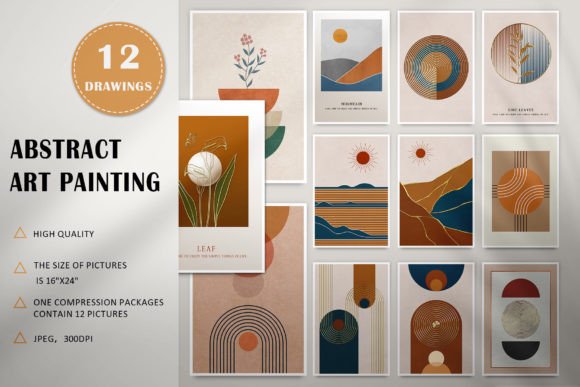
Gold Lines and Watercolor Geometric: Integrating Elegant Assets into Professional Design Workflows
In the landscape of modern graphic design, visual hierarchy and aesthetic cohesion are not merely decorative choices; they are functional components of communication. For professionals ranging from freelance illustrators to marketing directors, the ability to quickly produce high-quality, versatile assets is a critical workflow efficiency. This is where Gold Lines and Watercolor Geometric patterns enter the practical equation. These are not just static images; they are modular design systems that bridge the gap between organic texture and structured precision.
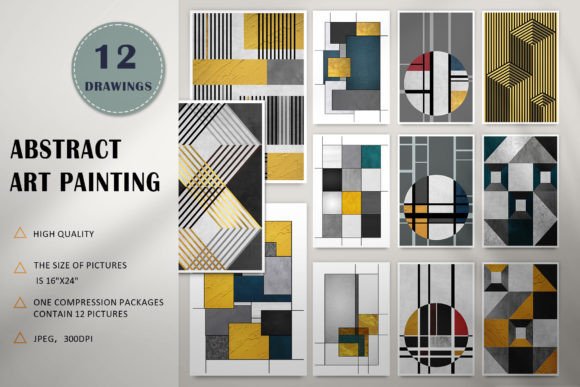
The specific asset set described—comprising 12 high-resolution JPG files at 4800x7200 pixels (16x24 inches) with a 300 dpi resolution—offers a robust foundation for both print-heavy and digital-first workflows. Understanding how to integrate these elements requires moving beyond simple "copy-paste" usage and toward strategic application in planning, execution, and final delivery phases of creative projects.
Technical Specifications as Workflow Enablers
Before diving into creative applications, it is essential to understand why the technical specifications of this asset pack matter to your production pipeline. In professional environments, file compatibility and resolution dictate feasibility.
- Resolution and Scale: At 300 dpi and 4800x7200 pixels, these images are print-ready for large-format outputs. A designer can seamlessly scale a single pattern tile or use the full composition for posters, packaging bags, or gallery wall hangings without pixelation. This eliminates the need for time-consuming upscaling processes in software like Photoshop or Illustrator.
- Format Compatibility: The use of JPG format ensures universal compatibility. Whether you are working in Adobe Creative Cloud, Affinity Suite, Canva, or older legacy systems, there are no transparency or vector-editing hurdles initially. This reduces friction when handing off files to non-designers, such as social media managers or small business owners who may need to drop the image into a template quickly.
- Volume and Variety: With 12 distinct high-resolution images, the set provides enough variety to maintain brand consistency across multiple touchpoints without appearing repetitive. This is crucial for marketers managing multi-channel campaigns where different platforms require unique but thematically linked visuals.
Pre-Production: Planning and Mood Boarding
The integration of Gold Lines and Watercolor Geometric often begins before the actual design work starts. During the mood boarding and conceptualization phase, these assets serve as excellent anchors for defining a project’s tone. The combination of metallic gold accents with soft watercolor textures creates a sophisticated duality: structure meets fluidity.
For educators creating course materials or bloggers developing content themes, these patterns can help establish a visual identity early on. By placing these images on a digital whiteboard or physical pin-up board alongside typography samples and color palettes, teams can evaluate contrast and readability. The geometric nature of the lines provides a grid-like stability, which helps in assessing how text might overlay the background. If the gold lines are too dense, they may compete with headlines; if the watercolor washes are too light, they may lack impact. This pre-production check saves hours of revision later.
Execution: Application Across Media Types
Once the concept is solidified, the execution phase involves adapting these assets to specific deliverables. The versatility of the 16x24 inch format allows for diverse implementation strategies depending on the medium.
Digital Media and Social Strategy
In digital workflows, screen real estate is limited, yet the demand for high-quality visuals is higher than ever. When designing for social media, the 4800-pixel width allows designers to crop tightly into the intricate details of the watercolor geometry. This is particularly effective for Instagram stories or Pinterest pins, where close-up textures create visual interest even at small sizes.
For website headers or blog post featured images, the full aspect ratio can be utilized. However, care must be taken regarding load times. While JPGs are efficient, ensuring the file size is optimized for web delivery (often requiring a secondary export at lower DPI) is a necessary step in the workflow. The gold lines, being sharp vectors in appearance, remain crisp even after compression, maintaining the premium feel of the brand.
Print Production and Physical Goods
The true strength of this asset set lies in its print readiness. For entrepreneurs launching product lines, these patterns are ideal for packaging design. The geometric structure ensures alignment during printing cuts, while the watercolor elements add an artisanal touch that appeals to consumers looking for handcrafted aesthetics.
Similarly, for stationery designers creating notebooks or periodicals, these images can serve as cover art or interior page borders. The 300 dpi resolution guarantees that the transition between the gold foil effect (simulated digitally) and the paper grain looks authentic in print. When preparing files for commercial printers, designers should convert the RGB JPGs to CMYK to ensure color accuracy, paying close attention to how the gold tones translate to ink. This is a critical quality control step that distinguishes amateur output from professional results.
Merchandising and Apparel
T-shirt design and textile printing benefit greatly from the repeatable nature of geometric patterns. Although these are provided as individual images, their compositional balance allows them to be tiled or used as focal points. For apparel, the contrast of the dark watercolor hues against white fabric, or the shimmer of gold lines against navy or black textiles, creates strong visual merchandising opportunities. The durability of the design is inherent in its simplicity; unlike complex photographic prints, geometric watercolor patterns age well and do not rely on fleeting trends.
Integration with Existing Tools and Systems
No design asset exists in a vacuum. To maximize the value of Gold Lines and Watercolor Geometric, it must interact smoothly with other tools in your stack.
Typography Pairing: The organic flow of watercolor pairs exceptionally well with clean, sans-serif fonts for a modern look, or elegant serif fonts for a traditional, luxurious feel. When integrating these patterns, always test legibility. Use the gold lines as subtle dividers or bullet points in documents to guide the reader’s eye without overwhelming the text.
Brand Consistency: For small business owners, maintaining a consistent brand voice across platforms is challenging. Using these patterns as a recurring element—on email signatures, invoice templates, and social media graphics—creates a cohesive brand ecosystem. The geometric rigidity provides a framework within which other brand colors can safely operate, preventing visual chaos.
Collaborative Workflows: Because the files are standard JPGs, they are easy to share via cloud storage platforms like Dropbox or Google Drive. Team members do not need specialized software to view or provide feedback on mockups. This lowers the barrier to entry for client approvals or team reviews, speeding up the decision-making process.
Quality Control and Long-Term Utility
Implementing these assets requires a mindset of organization and long-term planning. As you accumulate more design assets, keeping them accessible is key. Tagging these 12 images with metadata related to their use cases (e.g., "background," "texture," "gold accent") ensures they can be found quickly in future projects.
Furthermore, consider the lifecycle of the design. Watercolor trends may shift, but the combination of gold and geometry is timeless. Investing in high-resolution originals means you can repurpose these images years later for new ventures without needing to recreate them. This approach aligns with sustainable design practices, reducing digital waste and effort.
Conclusion on Practical Implementation
The Gold Lines and Watercolor Geometric asset set is more than a collection of pretty pictures; it is a toolkit for enhancing visual communication. By understanding its technical capabilities and integrating it thoughtfully into your pre-production planning, execution, and distribution channels, you elevate the perceived value of your work. Whether you are designing a luxury book cover, a startup’s pitch deck, or a series of educational posters, these patterns offer the structural integrity and artistic flair needed to stand out in a crowded marketplace. The key lies in treating them not as fillers, but as foundational elements that support your core message.