Printable Letter to Santa Claus: A Practical Guide for Creating a Memorable Holiday Tradition
The holiday season brings with it a unique set of logistical challenges for parents, ranging from managing schedules to curating gifts that feel special without contributing to clutter. Amidst this busyness, one tradition remains a cornerstone of childhood wonder: writing to Santa Claus. While the act of sending a letter is timeless, the method by which children compose these messages has evolved significantly. Today, many families are turning toward structured digital resources, specifically the Printable Letter to Santa Claus, to facilitate this experience. This approach offers a blend of convenience, creativity, and tangible keepsake value that differs markedly from traditional handwritten notes or generic store-bought cards.
For adults aged 20–50 who are evaluating various ways to engage their children in holiday traditions, understanding the nuances of these printable packs is essential. These resources are not merely sheets of paper; they are interactive tools designed to guide young writers through the process of articulating their wishes. By examining what makes these printable options distinct, how they compare to alternatives, and when they might be the most effective choice, parents can make informed decisions that enhance the magic of Christmas for their little ones.
Understanding the Printable Letter to Santa Claus Format
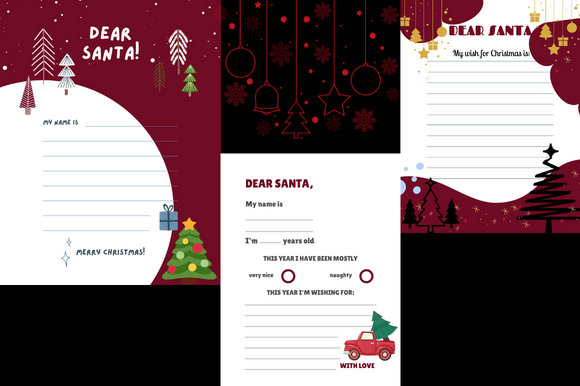
A Printable Letter to Santa Claus pack typically consists of high-resolution digital files, often delivered as a ZIP archive containing multiple pages. In the case of popular variations, such as the specific pack described here, the product includes three distinct designs across three pages. The first page often serves as an official letter template, allowing children to fill in the blanks regarding their name, address, and specific requests. The second page may function as a wish list, providing a structured space for itemizing desired gifts. The third page is frequently a decorative sheet where children can write a more personal message or draw illustrations.
The physical output is standardized at 8.5″ x 11″, ensuring compatibility with most home printers and framing sizes. This standardization is a key feature for modern parents who value consistency and ease of use. Unlike loose-leaf paper that might get lost or crumpled, these printed documents have a polished, intentional appearance. They transform a simple child’s scribble into a formal communication, elevating the perceived importance of the task for the child. For a young writer, holding a document that looks like an "official" letter reinforces the seriousness and excitement of the request.
Key Components of the Digital Pack
- Fill-in-the-Blank Letter: Reduces the anxiety of a blank page for early writers. It guides the structure of the correspondence, ensuring all necessary details (like good behavior status) are included.
- Decorative Wish List Sheet: Allows for visual expression. Children can draw pictures of toys alongside text, accommodating different developmental stages of literacy.
- Personal Message Page: Encourages creativity beyond material requests, fostering emotional connection and gratitude.
Comparing Printables to Traditional Alternatives
When evaluating whether to use a Printable Letter to Santa Claus, it is helpful to compare it against other common methods of holiday correspondence. Parents often weigh the benefits of digital printables against handwritten letters on plain paper, purchased stationery sets, or voice-to-text digital submissions.
Handwritten Letters on Plain Paper
The traditional approach involves giving a child a pen and a piece of paper. While this fosters free-form creativity, it presents significant friction for many families. Young children may struggle with the intimidation of a blank page, leading to frustration rather than joy. Furthermore, handwriting varies widely in legibility, which can complicate the process if parents intend to mail the letter physically or scan it for services that claim to deliver it. Printable templates solve this by providing a scaffolded structure, making the task achievable for toddlers and preschoolers who are still developing fine motor skills.
Purchased Stationery Sets
Store-bought Santa letter kits are widely available in retail stores during the fall season. These often include envelopes, stamps, and themed paper. However, they come with inherent limitations. First, they incur immediate out-of-pocket costs. Second, inventory is limited by store location and time, creating a sense of urgency that adds stress to an already busy season. Third, the quality of printed materials in mass-market kits can vary, sometimes feeling flimsy or overly commercial. Digital printables offer a cost-effective alternative, requiring only ink and paper, while allowing parents to choose the paper weight and type (e.g., cardstock for durability) that best suits their needs.
Digital-Only Submissions
In the age of technology, some platforms allow children to dictate letters via tablets or phones. While convenient, this method lacks the tactile element that is crucial for sensory development and memory formation. The physical act of printing, signing, and sealing a letter creates a ritualistic experience that digital inputs cannot replicate. The Printable Letter to Santa Claus bridges the gap between modern convenience and traditional ritual, offering the ease of digital acquisition with the tangible rewards of physical interaction.
Evaluating Strengths and Tradeoffs
No single solution fits every family’s lifestyle or values. Understanding the tradeoffs of using printable letter packs allows for better decision-making. Below is an analysis of the primary advantages and potential drawbacks.
Strengths
- Customizability: Parents can select fonts, colors, and themes that align with their family’s aesthetic or their child’s interests. Some digital packs allow for editing before printing, though pre-designed templates offer speed and reliability.
- Reusability and Archiving: Once downloaded, the files can be printed year after year. This makes them ideal for families with multiple children of different ages. Additionally, these letters serve as excellent keepsakes. Because they are printed on standard paper, they can be easily scanned, stored in digital folders, or preserved in scrapbooks.
- Accessibility: For families in remote areas or those with mobility issues, the ability to download and print instantly removes the barrier of travel to specialty shops.
Tradeoffs and Limitations
- Printer Dependency: The obvious limitation is the need for a functioning printer and sufficient ink. Families without reliable access to printing resources may find this option less viable.
- Lack of Physical Envelopes: Most digital packs do not include pre-made envelopes. Parents must either purchase envelopes separately or create them manually, adding a small step to the process.
- Screen Time Association: Acquiring the file requires internet access and screen interaction. For families trying to limit digital exposure, the initial download phase might be seen as a minor contradiction to offline goals, though the subsequent activity is entirely analog.
Decision Factors: When Is This the Right Choice?
Determining whether a Printable Letter to Santa Claus is the right tool depends largely on your family’s priorities regarding time, budget, and creative engagement.
Best-Fit Scenarios:
This option is ideal for parents who value efficiency and customization. If you are looking for a low-cost way to create a meaningful tradition without leaving the house, printables are superior. They are particularly beneficial for children who are hesitant writers; the fill-in-the-blank format provides confidence and ensures the letter is completed. Furthermore, if you plan to send the letter through postal services or use online Santa tracking services, having a clean, legible, and professionally formatted letter enhances the experience for both the child and the recipient service.
Alternative Considerations:
If your priority is purely artistic freedom without structural guidance, plain paper and crayons may be preferable. Similarly, if you wish to support local businesses or provide a hands-on crafting experience involving cutting and gluing, purchasing a physical craft kit might be more rewarding. Additionally, if you lack printing capabilities, exploring community centers, libraries, or office supply stores that offer printing services could mitigate this barrier.
Maximizing the Experience
To fully leverage the benefits of the Printable Letter to Santa Claus, consider integrating it into a broader holiday routine. Instead of rushing to complete the letter, treat the printing and filling process as a dedicated activity. Use high-quality cardstock to give the letter a premium feel. Involve the child in decorating the envelope or adding stickers. This transforms a simple administrative task into a cherished memory-building event.
Moreover, the digital nature of these files allows for preservation. After the holidays, scan the completed letters. Over the years, you will have a growing archive of your child’s evolving desires and handwriting styles. This longitudinal view offers insights into their development and interests, far beyond the immediate context of Christmas morning.
Conclusion
The choice between traditional handwritten notes, store-bought kits, and digital printables is ultimately about balancing convenience with meaning. A Printable Letter to Santa Claus offers a robust middle ground, combining the ease of digital distribution with the tangible joy of physical creation. By providing structured templates, customizable designs, and archival potential, these digital packs empower parents to foster a magical, stress-free holiday tradition. Whether used as a standalone activity or part of a larger seasonal celebration, they represent a practical, thoughtful resource for modern families seeking to preserve the wonder of Christmas for their children.