30 Stone Texture Photoshop Brushes: A Practical Evaluation for Digital Artists
In the realm of digital design and photo manipulation, achieving photorealistic results often hinges on the quality of textures applied to a composition. While high-resolution photography remains the gold standard for organic surfaces, it is not always practical or feasible to source specific materials for every project. This is where specialized assets, such as the 30 Stone Texture Photoshop Brushes, become indispensable tools in a designer’s workflow. These brushes offer a streamlined method for integrating realistic stone elements into digital compositions, ranging from architectural visualizations to fantasy artwork.
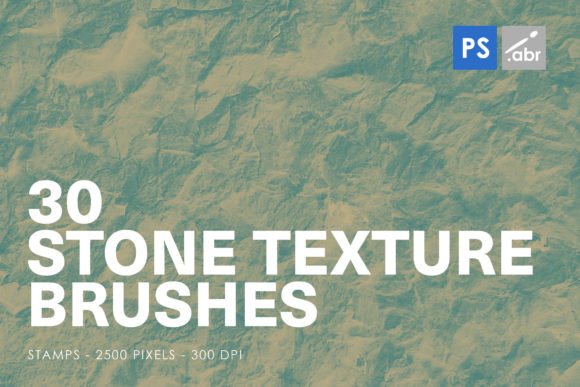
The collection described includes 30 distinct stamp brushes, each rendered at a resolution of 2500 pixels. This specification is significant because it ensures that the texture retains clarity even when scaled up or used in large-format prints. The compatibility with Adobe Photoshop CS2 through the latest Creative Cloud versions further broadens its utility, allowing both legacy users and those on the cutting edge of software technology to integrate these assets seamlessly. For professionals and serious hobbyists alike, understanding the practical application and limitations of such a resource is essential before incorporating it into a production pipeline.
Understanding the Asset: Specifications and Scope
At its core, this brush set is designed to function as a stamp tool rather than a dynamic paintbrush. This distinction is crucial for setting expectations regarding how the asset behaves within the software. A stamp brush applies a pre-defined image patch onto the canvas, whereas a traditional brush might simulate bristle marks or varying opacity based on pressure sensitivity. The 30 Stone Texture Photoshop Brushes provide a library of static stone patterns that can be placed, rotated, and scaled to fit the needs of the composition.
The inclusion of 30 variations suggests a curated selection rather than a random dump of files. In a well-assembled pack, one would expect to see a variety of stone types—such as granite, slate, limestone, or rough-hewn rock faces—each offering different grain structures and color palettes. The 2500-pixel size indicates that these are high-fidelity captures or renders. When working with textures, resolution is paramount; low-resolution stamps result in pixelation when stretched, which immediately breaks the illusion of realism. By providing high-resolution sources, the creator ensures that the final output remains crisp, whether it is destined for a mobile screen or a billboard.
Practical Applications in Professional Workflows
The versatility of these brushes extends across multiple disciplines. For graphic designers and marketers, these textures serve as excellent overlays for creating depth and tactile quality in promotional materials. Imagine a luxury brand advertisement featuring a product resting on a rugged stone surface; instead of photographing a physical setup, a designer can composite a digital image using these brushes to achieve the desired aesthetic quickly and cost-effectively.
- Photo Manipulation: Integrating natural elements into surreal or composite images requires seamless blending. Stone textures add weight and grounding to otherwise floating digital objects.
- Game Art and VFX: For indie developers or concept artists, quick prototyping of environments is vital. These brushes allow for rapid texturing of walls, floors, and props without the need for complex UV mapping or baking processes in early stages.
- Text Fills and Typography: Designers frequently use textures to fill letterforms, giving text a tangible, material presence. A stone-filled headline conveys stability and permanence, making it ideal for construction, history, or outdoor adventure themes.
- Decorative Elements: Beyond structural applications, these brushes can be used as decorative borders, background accents, or standalone artistic elements in digital scrapbooking or editorial layouts.
Evaluating Quality and Usability
When assessing the value of any digital asset, usability is just as important as raw quality. The 30 Stone Texture Photoshop Brushes claim compatibility with a wide range of Photoshop versions, from CS2 to CC. This backward compatibility is a notable strength, ensuring that older machines or studios with standardized legacy software can still utilize the resources without needing to upgrade their entire ecosystem. However, users should be aware that while the brushes themselves are compatible, advanced features like layer styles or blend modes available in newer CC versions may enhance the final result.
The consistency of the brush strokes is another critical factor. In a good stamp brush set, the edges should be clean, and the texture should repeat naturally if tiled. If the transition between the stone texture and the underlying layer is too harsh, it will look artificial. Designers often rely on layer masks and blending modes (such as Multiply, Overlay, or Soft Light) to integrate these stamps into their work. The effectiveness of the 30 Stone Texture Photoshop Brushes will largely depend on the user’s proficiency in these foundational Photoshop techniques. The brushes provide the material, but the artist provides the context.
Furthermore, the presentation of the brushes matters. If the installation process is straightforward and the brushes are organized logically—perhaps categorized by stone type or color temperature—the learning curve decreases significantly. A disorganized pack can lead to frustration, causing designers to abandon the asset in favor of more accessible alternatives. Assuming a standard .abr file format, the installation involves simply dragging the file into the Photoshop Presets folder, a process that is generally intuitive for anyone familiar with the software.
Limitations and Realistic Expectations
No single asset can solve every design challenge, and it is important to acknowledge the limitations of stamp-based brushes. Unlike procedural generation tools or AI-driven texture generators, these are static images. They do not adapt to the curvature of a 3D object automatically. If a designer attempts to wrap a flat stone texture around a cylindrical column without proper distortion or warping, the result will appear flat and unrealistic. Therefore, these brushes are best suited for 2D compositing or for serving as base textures that are later manipulated.
Additionally, the lighting direction must be considered. Since the texture is a fixed image, it has a predetermined lighting scheme. If the rest of the composition is lit from the left, but the stone texture appears to be lit from the right, the integration will fail. Users must be prepared to adjust brightness, contrast, and color balance to match the ambient lighting of their scene. This requirement adds a step to the workflow but also offers creative control, allowing the artist to customize the look of the stone to fit the mood of the piece.
Who Benefits Most?
The primary beneficiaries of this resource are freelancers, small business owners, and educators who need high-quality assets quickly without the budget for custom photography or commissioning detailed 3D models. For bloggers and publishers, these brushes can enhance article headers and featured images, adding a professional polish that engages readers. Entrepreneurs creating pitch decks or marketing collateral can use these textures to make presentations more visually compelling.
Serious hobbyists and students also stand to gain significantly. Learning to manipulate textures is a fundamental skill in digital art education. Having a reliable set of stone brushes allows students to practice blending, masking, and color correction without worrying about sourcing perfect reference images. It serves as a training wheel for more complex texturing workflows.
Final Thoughts on Long-Term Value
Investing in a resource like the 30 Stone Texture Photoshop Brushes is less about acquiring a single effect and more about expanding a toolkit. In a digital landscape where content volume is increasing, efficiency is key. The ability to drop a high-resolution, realistic stone texture into a project in seconds can save hours of manual painting or searching for stock photos. The long-term value lies in the accumulation of these time savings across numerous projects.
While no brush set replaces the need for artistic judgment and technical skill, these 30 stamp brushes offer a robust foundation for creating believable stone elements. Their high resolution, broad compatibility, and diverse application potential make them a practical addition to any Photoshop user’s library. For those looking to add grit, weight, and organic realism to their digital work, this resource provides a reliable and efficient solution. As with any tool, success depends on how thoughtfully it is integrated into the broader creative process, but for the right audience, the payoff in both quality and speed is substantial.