Evaluating Mandala Decorative Drawing: A Comprehensive Guide to Digital Assets and Design Flexibility
In the realm of digital design, crafting intricate patterns requires precision, scalability, and versatility. Mandala Decorative Drawing has emerged as a significant category within vector art and graphic resources, offering designers a structured yet creative foundation for various projects. Whether you are a hobbyist creating custom home decor or a professional designer developing brand identities, understanding the nuances of these assets is crucial. This article explores what constitutes a high-quality Mandala Decorative Drawing file, analyzes the technical specifications that matter most—such as canvas size and file formats—and helps you determine if this specific resource aligns with your creative workflow.
The Essence of Mandala Decorative Drawing in Modern Design
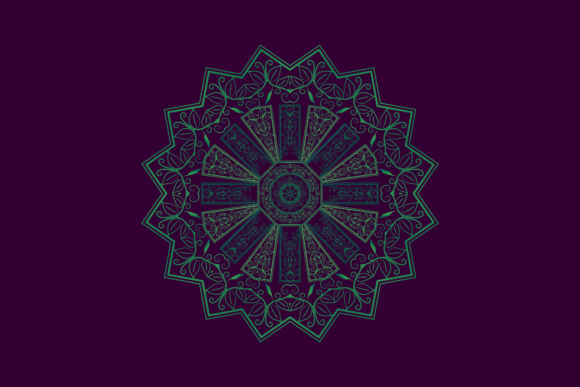
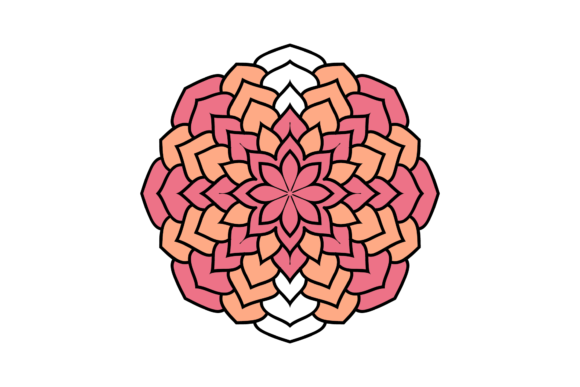
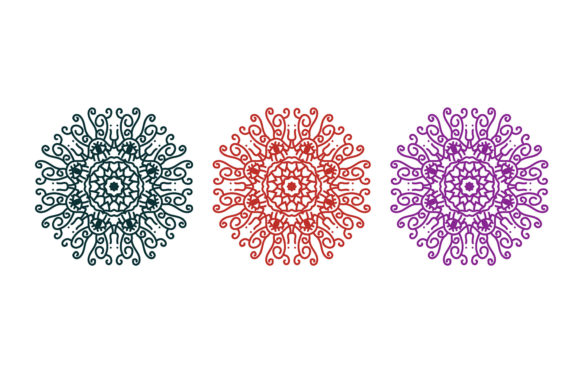
A Mandala is traditionally a geometric configuration of symbols, often circular in shape, representing the universe or spiritual wholeness. In contemporary digital design, "Mandala Decorative Drawing" refers to vector-based illustrations that capture this symmetry and complexity without the limitations of raster graphics. Unlike hand-drawn sketches that may vary slightly with each copy, vector mandalas are mathematically defined, ensuring perfect replication regardless of scale.
What makes Mandala Decorative Drawing distinct from other decorative elements is its inherent balance. It combines radial symmetry with detailed line work, allowing it to serve multiple functions: as a standalone focal point, a subtle background texture, or a framing element for typography. The appeal lies in its adaptability; a single well-crafted mandala can be scaled down for a delicate jewelry design or expanded for a large-scale wall mural without losing clarity.
Analyzing Technical Specifications: Why Format Matters
When evaluating digital design assets, the format and resolution are not merely technical details—they dictate usability. A premium Mandala Decorative Drawing package typically includes a suite of formats to accommodate different software environments and output requirements. Let us break down why receiving a multi-format bundle is essential for a seamless design process.
The Vector Advantage: AI, EPS, SVG, and DXF
Vector files are the backbone of scalable design. They use mathematical equations rather than pixels to define shapes, meaning they can be resized infinitely without pixelation. For Mandala Decorative Drawing, this capability is non-negotiable due to the fine detail involved.
- AI (Adobe Illustrator): As the industry standard for vector editing, the AI file allows designers to open the artwork in Adobe Illustrator. This is ideal for those who need to modify colors, adjust stroke weights, or deconstruct specific segments of the mandala for a custom layout.
- EPS (Encapsulated PostScript): Often used in professional printing workflows, EPS files ensure compatibility across various desktop publishing applications. If you plan to send your mandala design to a commercial printer for large-format output, an EPS file guarantees that the intricate lines remain crisp and editable.
- SVG (Scalable Vector Graphics): Essential for web design, SVG files are XML-based and can be manipulated via code. This format is perfect for responsive websites where the mandala needs to scale perfectly on mobile devices or be animated using CSS.
- DXF (Drawing Exchange Format): While less common in pure graphic design, DXF is critical for crafters and laser cutting enthusiasts. If your goal is to cut vinyl, wood, or acrylic using a CNC machine or laser cutter, the DXF file provides the precise coordinate data needed for physical production.
Raster Support: JPG and PNG
While vectors offer scalability, raster images provide immediate visual context. High-resolution JPG and PNG files allow designers to preview the asset in any image viewer or basic editing software like Photoshop or Canva without needing specialized vector tools.
The inclusion of a PNG file is particularly valuable because it supports transparency. This allows the mandala to be overlaid onto any background color or image seamlessly, which is a common requirement in logo design and social media graphics. Meanwhile, the JPG file offers a compressed, universally compatible version for quick sharing or low-bandwidth web usage.
Canvas Size and Resolution: Understanding 1920px x 1280px
One specific detail often overlooked is the canvas size provided with digital assets. A specification of 1920px by 1280px corresponds to a standard widescreen aspect ratio (3:2). While this might seem modest compared to ultra-high-definition displays, it serves a specific purpose in the design pipeline.
First, this resolution is sufficient for most screen-based applications, including website headers, blog post thumbnails, and tablet displays. Second, and more importantly, starting with a vector source means that the initial pixel dimensions are arbitrary. You can export the same AI or SVG file at 4K resolution (3840x2160) or even larger for print purposes without degradation. The 1920x1280 preview ensures that the design is dense enough to show detail but not so large that it becomes unwieldy for standard editing software.
However, users should note that if their primary need is ultra-high-resolution print (e.g., billboard size), relying solely on the raster PNG/JPG at this native resolution will result in blurriness. In such cases, one must utilize the vector files (AI/EPS/SVG) to regenerate the image at the required DPI (dots per inch), typically 300 DPI for print quality.
Comparing Mandala Decorative Drawing Alternatives
When selecting decorative assets, designers often weigh Mandala Decorative Drawing against other styles such as floral patterns, abstract geometry, or watercolor textures. Here is how mandalas compare in terms of utility and aesthetic impact.
Versatility vs. Specificity
Floral patterns are beautiful but often tied to specific themes like spring, romance, or nature. Abstract geometrics are modern and clean but can sometimes feel cold or corporate. Mandala Decorative Drawing occupies a middle ground. It carries a sense of organic flow similar to florals but maintains the structural integrity of geometry. This makes it suitable for a broader range of industries, from wellness and yoga studios to tech startups seeking a "holistic innovation" aesthetic.
Complexity and Editability
Compared to pre-made stock photography, vector mandalas offer superior editability. A stock photo of a mandala is fixed; you cannot easily change the color palette or remove a distracting element. With a dedicated Mandala Decorative Drawing file, especially in AI or EPS format, every curve and line is accessible. This allows for customization—for instance, thinning out the lines for a minimalist look or thickening them for a bold, tattoo-style application.
Decision Factors: Is This Resource Right for You?
Choosing the right design asset depends on your end goal. Below are scenarios where Mandala Decorative Drawing shines, and situations where you might consider alternatives.
Best-Fit Scenarios
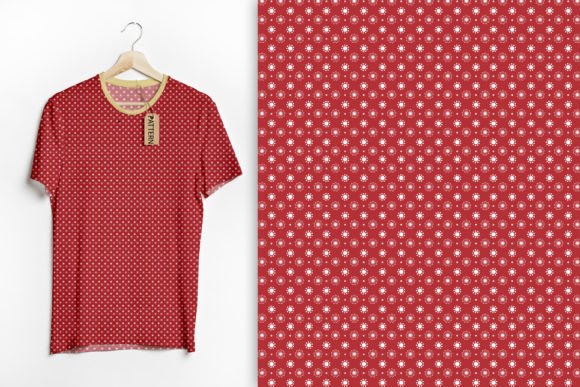
- Custom Merchandise: If you are designing t-shirts, mugs, or phone cases, the multi-format bundle is invaluable. The DXF file aids in cutting materials, while the AI file helps in finalizing the print-ready layout.
- Web and App Interfaces: The SVG format ensures that your interface looks sharp on Retina displays and high-DPI screens. The lightweight nature of SVG also contributes to faster page load times.
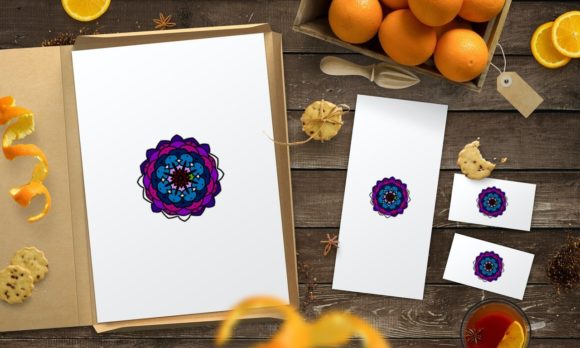
- Branding and Identity: For brands wanting to convey balance, community, or creativity, a mandala serves as a strong foundational motif. Its symmetry works well in logos, business cards, and letterheads.
When to Look Elsewhere
If your project requires photorealism or complex shading gradients that rely on photographic texture, a vector mandala may appear too flat or graphic. Similarly, if you are working on a project that demands a highly specific cultural or historical accuracy beyond general aesthetic inspiration, you may need to commission a custom illustration from an artist familiar with those traditions, rather than using a generic decorative asset.
Maximizing Value Through Integration
To get the most out of a Mandala Decorative Drawing package, integrate it into your workflow early. Do not treat it as a static image. Instead, use the AI file to experiment with layering. Try placing the mandala behind text to create a watermark effect, or use the clipping mask feature to contain the pattern within a specific shape, such as a circle or a hexagon.
Furthermore, consider the color psychology associated with your choice. Mandalas are neutral in form but powerful in color. A black-and-white version conveys sophistication and minimalism, while vibrant hues can evoke energy and playfulness. The ability to recolor vector paths instantly allows you to test multiple palettes without redrawing the artwork.
Conclusion
Selecting the right design asset is about matching technical capabilities with creative vision. A Mandala Decorative Drawing offering that includes six distinct formats—from editable vectors to transparent rasters—provides a robust toolkit for diverse applications. By understanding the strengths of vector scalability, the utility of specific file types like DXF for manufacturing, and the visual flexibility of the 1920x1280 canvas, you can make an informed decision that enhances your productivity and elevates your final output. Whether for digital screens or physical prints, this type of versatile asset serves as a reliable foundation for professional and personal design projects alike.